
Plans A, B, C, D, and More
Some of you may already know that I studied in Japan with Dr. Shinichi Suzuki (Founder of the Suzuki Method) from 1983 to 1986 - long before the convenience of internet communication. It was an amazing three years filled with musical and personal growth. Recently, when someone asked me about my takeaway from this lengthy apprenticeship with Dr. Suzuki, it really got me thinking. Was it the high performance levels? The focused lessons? The emphasis on tone production? The community of colleagues? That was all there. But forty years after I graduated from the Talent Education Institute, something else sits at the top of the list.
For three years, I saw Dr. Suzuki almost every day (yes, I went to school on many weekends). Spending so much time at the school, it didn’t take me long to see what Dr. Suzuki was all about. He loved trying out new things. Testing them out. Involving all the violin teacher apprentices in the process. Trying things from one angle and then another. Day after day, week after week, month after month - on and on it went for the entire three years at TEI.
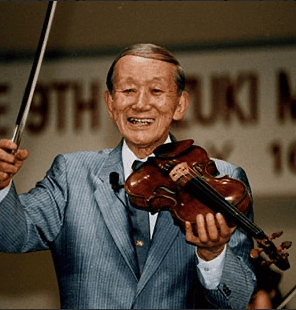
What’s my takeaway from Dr. Suzuki? That music teaching comes with Plans A, B, C, D, and more, and that it’s up to us as music teachers to get them in our toolkit. Dr. Suzuki never seemed satisfied with simply doing things the way they had always been done (Plan A). He was curious. He was open to possibilities. He was willing to experiment, to take a different approach, and to see what might happen (Plans B, C, D, and more). And I want you to know that Dr. Suzuki was well into his eighties when I studied with him. Talk about longevity - he was a great example of a teacher who continued to explore, learn, question, and rethink throughout his entire life.
Forty years later, I’m inspired by this reconnection with Dr. Suzuki. I’m also inspired by what’s going on at Teach Music 21C where we believe that meaningful teaching involves giving ourselves permission to question, explore, and try new things. We don't need to have all the answers ready to go at any moment. That seems like a mammoth task. What we can do is to be willing to step back every once in a while, to question what’s working and what’s not working in our teaching. With our willingness to examine and willingness to trying something different, we’ve got super tools that help us take steps in directions we might not have known were just waiting to be taken. Plans A, B, C, D, and more - who knows how long the list will be.
After all, the music-making lives of our students are still unfolding. What we do today can make a difference in what becomes possible for them tomorrow.
What's one thing you might be willing to rethink in your teaching?
What new strategy could you explore to make a meaningful difference in your students' musical lives?
Do you have teaching colleagues who might appreciate reading this blog? Please feel free to share it with them.
If this exploration into Plans A, B, C, D, and more resonates with you, I’d love to hear from you. Click HERE to send me an email message.
This is your invitation to keep the conversation going....